Embaucher un Aide-Comptable à Distance ou Utiliser un Logiciel Comptable ?
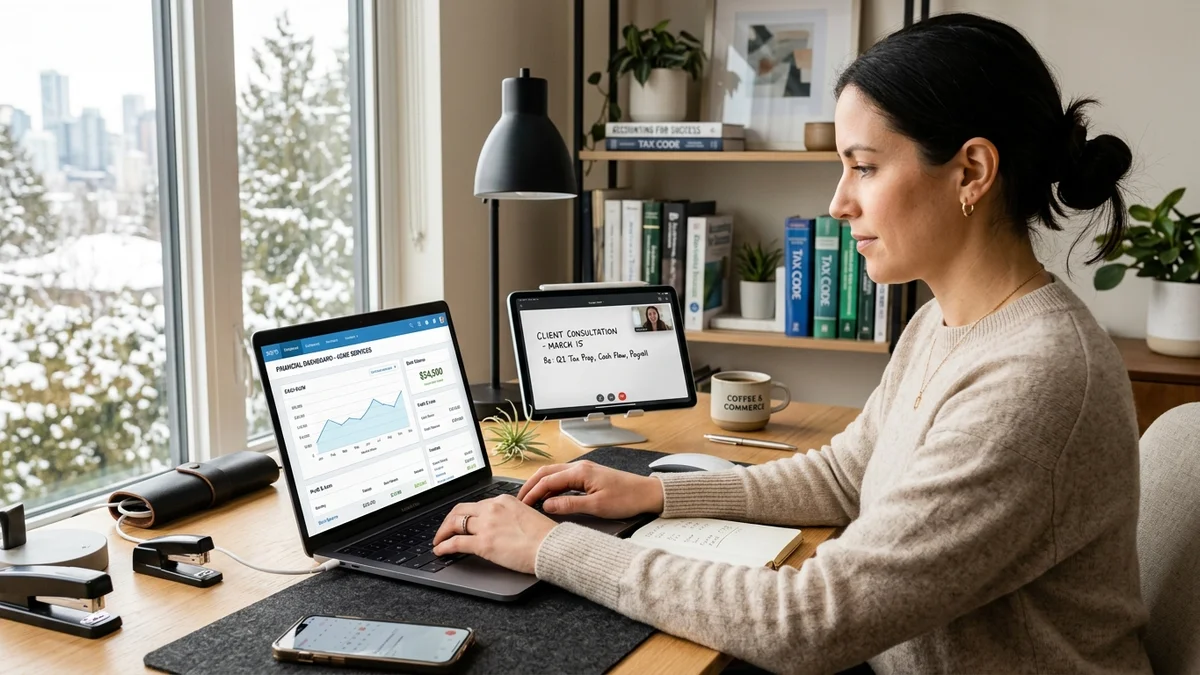
Découvrez s'il est plus avantageux pour votre PME d'engager un aide-comptable virtuel ou d'utiliser un logiciel de comptabilité infonuagique.
Le Défi de la Gestion Financière en Entreprise
Tout propriétaire de petite entreprise est un jour confronté au même arbitrage : quelle est la meilleure méthode pour gérer ses finances ? Face à l'essor des technologies, les logiciels comptables sont devenus plus accessibles. Toutefois, l'expertise humaine d'un aide-comptable à distance apporte une valeur ajoutée stratégique qu'aucune machine ne peut reproduire.
Choisir entre un professionnel à distance et un logiciel autonome dépend du volume de vos transactions, de la complexité de votre structure et de votre aisance avec les chiffres. Si le logiciel automatise la saisie de données, l'expert comptable analyse ces données pour orienter vos décisions d'affaires.
Avantages et Limites des Logiciels Comptables
Les plateformes infonuagiques comme QuickBooks ou Xero offrent une méthode économique pour consigner les revenus et dépenses. Elles permettent de générer des rapports sommaires, d'émettre des factures et de se synchroniser avec vos comptes bancaires.
Cependant, un logiciel dépend entièrement de la qualité des données saisies. Une erreur de catégorisation fiscale ou l'omission d'une déduction de TPS/TVQ ne sera pas signalée par le système, ce qui risque de fausser votre bilan et de compliquer la saison des impôts.
- Solution abordable pour les entreprises en phase de démarrage.
- Connexion bancaire automatisée réduisant la saisie manuelle.
- Exige une compréhension minimale des principes comptables canadiens.
- Risque élevé d'erreurs non détectées sans supervision d'un professionnel.
Pourquoi Faire Appel à un Aide-Comptable à Distance ?
L'aide-comptable à distance agit comme un véritable partenaire de confiance pour votre PME. Il s'assure non seulement de la conformité de vos livres, mais vous aide aussi à interpréter vos états financiers mensuels.
De plus, un professionnel qualifié applique en permanence les dernières directives de l'ARC et de Revenu Québec, évitant ainsi des pénalités fiscales onéreuses à votre entreprise.
Trouver le Juste Équilibre pour Votre Entreprise
Pour la majorité des PME, la combinaison hybride s'avère optimale : utiliser un logiciel infonuagique pour la facturation quotidienne, tout en déléguant la conciliation bancaire et la révision mensuelle aux experts de Snipay.
Investir dans un accompagnement professionnel structuré protège la rentabilité et la croissance pérenne de votre entreprise.
Une question sur ce sujet ?
Échangez avec un expert snipay. lors d'une consultation gratuite.
Prendre rendez-vous avec un expert
Tenue de Livres à Distance : Tout ce que Vous Devez Savoir
Fonctionnement, sécurité des données et avantages concrets de la comptabilité dématérialisée pour les PME canadiennes.

Que Fait Concrètement un Aide-Comptable Virtuel ?
Découvrez le rôle quotidien, les responsabilités et la valeur ajoutée d'un spécialiste de la tenue de livres en ligne pour votre entreprise.